


Nepean Peninsula Who's Who
Public Profile
PUBLIC PROFILE
Eriko Takefuji
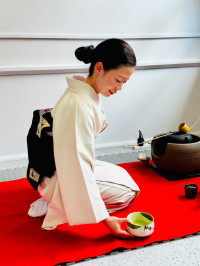
Local ResidentEriko at a Chado Workshop at Mitcham Community Centre in 2025
As a dedicated instructor of the Urasenke school of Japanese tea ceremony (Chado), one of Japan’s oldest and largest tea traditions, I also conducts workshops introducing the art and spirit of Chado to Australian audiences.
Across my work in traditional crafts, landscape design and tea ceremony, I am passionate about sharing the richness of Japanese culture and the essence of Japanese aesthetics with people in Australia.
TAKEFUJI
While the online boutique is the heart of TAKEFUJI, Eriko also participates in Japanese cultural events and markets held in Adelaide, creating opportunities for people to discover and experience the richness of Japanese craftsmanship.
Launched in 2026, TAKEFUJI LAWLER is a landscape design practice that explores how Japanese aesthetics can be expressed within the unique natural environment of Australia. Working alongside her husband Richard, whose background is in architectural design, TAKEFUJI LAWLER aims to create gardens that are not confined to the traditional Japanese garden style, but instead draw on the essence of Japanese aesthetics to create spaces that respond to both people and nature.
Connect through my public pages
Public information provided by this member.
Share this Portrait
Distinguished and Famous people from Nepean Peninsula
🌊 Harold Holt
Prime Minister Harold Holt disappeared while swimming at Cheviot Beach near Portsea on 17 December 1967. The extensive search failed to recover his body, and the police report found no indication that the disappearance was anything other than accidental. The turbulent conditions were central to that account. His death brought national mourning and a change of political leadership, making a small stretch of peninsula coast the setting for a major event in Australian public life.
🎖️ John Monash
John Monash’s early military experience included the Melbourne Garrison Artillery, whose work involved Fort Nepean and the defences of Port Phillip. That connection preceded the First World War command for which he became internationally known. The peninsula’s batteries, observation points and training landscape were practical parts of the colony’s defence system, rather than simply scenic coastal structures. Monash’s association places a familiar national figure within that earlier military setting. It also shows how careers later described through large campaigns could begin with years of technical study, exercises and local service.
